Best Construction Materials for House in Nepal | Durable, Safe, Cost-Effective Choices
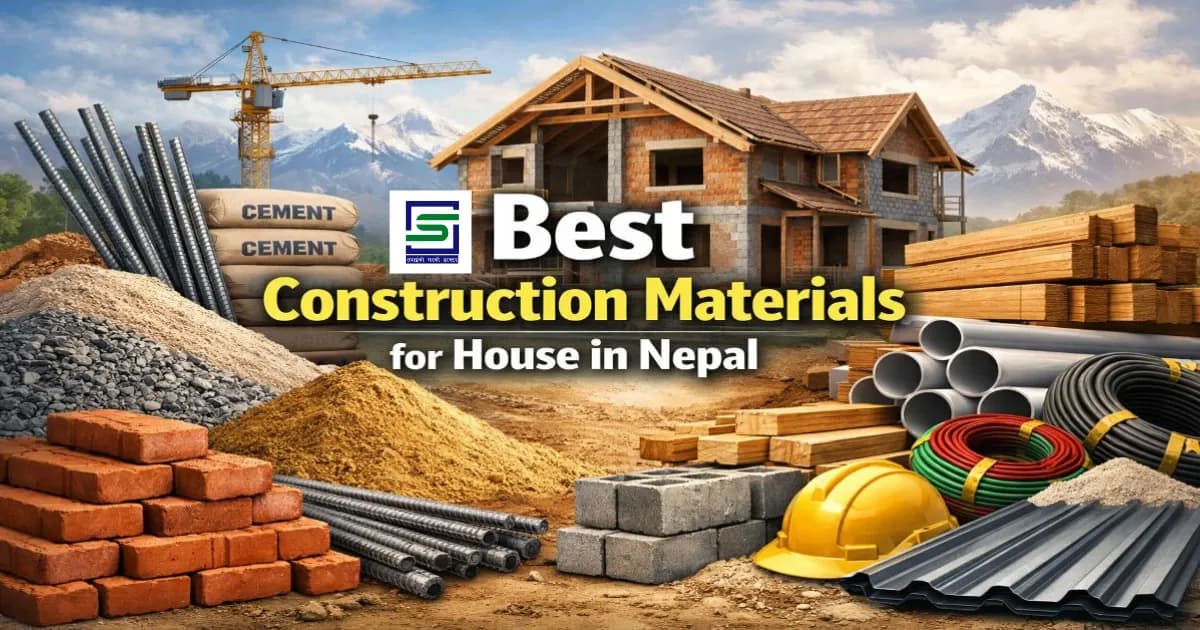
House construction in Nepal has undergone a significant transformation over the past few decades. Traditional houses made of mud, stone, and timber have gradually evolved into modern reinforced cement concrete (RCC) structures. Rapid urbanization, population growth, and increasing awareness about safety especially after the 2015 earthquake have reshaped how homes are designed and built across the country. Today, homeowners are more conscious about durability, seismic resistance, affordability, and sustainability. Selecting the right construction companies in Nepal and right construction materials is no longer just a matter of cost; it directly affects structural safety, maintenance requirements, thermal comfort, and long-term property value. Material selection in Nepal depends on several factors such as location (urban vs rural), climate, soil condition, availability, budget, and earthquake risk. While rural hilly regions still rely on stone masonry and locally sourced materials, urban centers like Kathmandu, Pokhara, Butwal, and Chitwan predominantly use cement, steel, and modern finishing materials. Given Nepal’s location in a high seismic zone, strength, flexibility, and earthquake resistance are critical considerations. This makes reinforced materials and proper construction practices essential for long-term safety and sustainability.
In this blog, we explore the best construction materials for house construction in Nepal their roles, importance, and how to choose them wisely.
Understanding the Importance of Construction Materials in Nepal
Before selecting materials, it is important to understand why material quality matters so much in Nepalese construction:
- Earthquake vulnerability: Nepal lies in a highly active seismic zone, making material strength and ductility essential.
- Climatic diversity: From humid Terai plains to cold mountainous regions, materials must withstand varying weather conditions.
- Availability & transportation: Some materials are locally available in rural areas, while others are imported or transported long distances.
- Cost sensitivity: Most homeowners operate within strict budgets, making cost-performance balance crucial.
Using the right materials ensures:
- Structural stability
- Lower maintenance costs
- Better energy efficiency
- Longer building lifespan
Essential Materials Used in House Construction in Nepal
1. Cement
Role in Construction
Cement is the backbone of modern house construction in Nepal. It is used in concrete, mortar, plastering, flooring, and masonry works. Cement acts as a binding agent that holds aggregates together and provides compressive strength.
Why Cement Is Essential in Nepal?
Cement plays a critical role in load-bearing and RCC structures, which are essential for earthquake resistance. In Nepal, the most commonly used types are:
- Ordinary Portland Cement (OPC)
- Portland Pozzolana Cement (PPC)
PPC is widely preferred for residential construction due to its better workability, durability, and resistance to chemical attacks, especially in moist environments. OPC is commonly used where early strength gain is required.
Nepal’s cement consumption exceeds 9 million metric tons annually, reflecting its dominance in the construction sector. Certified cement complying with Nepal Standard (NS) and Indian Standard (IS) codes ensures quality and safety.
Source references:
- House Design in Nepal – Construction Materials Cost
- Pride Construction Nepal – Cement Guide
2. Bricks and Blocks
Role in Construction
Bricks are extensively used for:
- Wall construction
- Partition walls
- Building exteriors
They provide structural enclosure, thermal insulation, and aesthetic appeal.
Why Bricks Are Essential?
Bricks remain popular in Nepal due to affordability, accessibility, and durability. Traditional burnt clay bricks dominate urban construction, while cement blocks are increasingly used in modern projects.
Brick kilns supply nearly 60% of walling materials in urban Nepal, making bricks one of the most widely used construction materials.
In recent years, Autoclaved Aerated Concrete (AAC) blocks have gained popularity due to:
- Lightweight nature
- Better thermal insulation
- Reduced structural load
AAC blocks are especially suitable for earthquake-resistant buildings as they reduce dead load.
Source references:
- Jadan Construction Group – Materials Used in Nepal
- House Design in Nepal – Brick Cost Guide
3. Sand and Aggregates
Role in Construction
Sand and aggregates form the base of:
- Concrete
- Mortar
- Plaster
They directly influence the strength, durability, and workability of concrete.
Why They Are Essential?
Well-graded sand and aggregates ensure proper bonding and load transfer. Poor quality sand weakens concrete and increases cracking.
Commonly used materials in Nepal include:
- River sand
- Crushed stone aggregates
Due to environmental concerns and over-extraction of river sand, alternative sources and manufactured sand are being explored.
Aggregates must be:
- Clean
- Properly graded
- Free from organic impurities
Source references:
- House Design in Nepal – Sand & Aggregate Cost
- Jadan Construction Group – Aggregate Guide
4. Steel (TMT Bars & Rods)
Role in Construction
Steel reinforcement provides tensile strength to concrete, which is naturally weak in tension. TMT (Thermo-Mechanically Treated) bars are used in:
- Beams
- Columns
- Slabs
- Foundations
Why Steel Is Essential in Nepal?
Nepal’s seismic risk makes steel reinforcement non-negotiable. TMT bars are preferred because they offer:
- High ductility
- Corrosion resistance
- Better bonding with concrete
Steel contributes approximately 25–30% of total construction material cost in urban residential buildings. Choosing certified and tested steel brands is critical for safety and durability.
Source references:
- Jadan Construction Group – Steel in RCC Buildings
- House Design in Nepal – Steel Price Guide
5. Stones
Role in Construction
Stone is one of the oldest construction materials in Nepal and is still used for:
- Foundations
- Boundary walls
- Retaining walls
- Rural housing
Why Stone Is Essential?
Stone offers:
- High durability
- Natural thermal regulation
- Low cost in hilly areas
In rural and mountainous regions where stone is locally available, it remains a cost-effective solution. While stone masonry is less common in urban housing today, it is still widely used for landscaping and traditional homes.
Source references:
- Jadan Construction Group – Traditional Materials
6. Timber and Plywood
Role in Construction
Timber and plywood are used for:
- Doors and windows
- Furniture
- Flooring
- False ceilings
Why Timber Is Essential?
Wood provides natural insulation, flexibility, and aesthetic warmth. Commonly used timber species in Nepal include:
- Sal
- Sissoo
Due to deforestation concerns, engineered wood products such as:
- Plywood
- Blockboard
- MDF
are increasingly used as sustainable alternatives.
Proper seasoning and treatment of timber are essential to prevent warping, decay, and termite attacks.
Source references:
- Jadan Construction Group – Timber & Plywood Guide
7. Pipes and Plumbing Materials
Role in Construction
Plumbing materials ensure:
- Clean water supply
- Proper drainage
- Sanitation
Common materials include:
- PVC
- CPVC
- PPR pipes
Why Plumbing Materials Are Essential?
Poor-quality plumbing leads to leakage, contamination, and costly maintenance. PPR pipes are increasingly preferred for their:
- Heat resistance
- Non-toxic properties
- Long lifespan
Reliable plumbing materials are essential for long-term functionality and hygiene.
Source references:
- Houseland Nepal – Plumbing Materials
8. Roofing Materials
Role in Construction
Roofing protects houses from:
- Rain
- Snow
- Heat
- UV exposure
Common roofing options in Nepal:
- RCC slabs
- CGI sheets
- Roofing tiles
Why Roofing Materials Are Essential?
RCC roofs dominate urban areas due to durability and seismic performance. CGI sheets remain popular in rural regions due to affordability and ease of installation.
Weather-resistant and leak-proof roofing is especially important during Nepal’s monsoon season.
Source references:
- Houseland Nepal – Roofing Materials Guide
9. Glass and Tiles
Role in Construction
Glass and tiles are used for:
- Windows and facades
- Flooring
- Bathrooms and kitchens
Why They Are Essential?
Tiles are waterproof, easy to clean, and durable. Glass improves:
- Natural lighting
- Ventilation
- Energy efficiency
Modern homes increasingly use tempered and laminated glass for safety.
Source references:
- Jadan Construction Group – Finishing Materials
Tips for Buying Construction Materials in Nepal
Choosing the right materials requires careful planning and informed decision-making.
1. Check Quality and Certification
Always ensure materials comply with Nepal Standard (NS) or relevant IS codes. Certified materials are tested for strength, durability, and safety.
2. Compare Prices
Material prices vary across suppliers and regions. Comparing quotations helps avoid overpayment while maintaining quality.
3. Source from Reliable Suppliers
Authorized suppliers provide genuine materials, warranties, and after-sales support.
4. Prioritize Earthquake-Resistant Materials
Investing in high-quality cement, TMT steel, and properly graded aggregates significantly improves seismic performance.
5. Plan Quantities Accurately
Overbuying leads to wastage; underbuying delays construction. Accurate estimation saves time and money.
6. Inspect Materials on Delivery
Check materials at the site to ensure they match specifications and are undamaged.
7. Stay Updated on Market Trends
New eco-friendly and energy-efficient materials are emerging in Nepal’s construction market. Staying informed helps improve sustainability and property value.
Wrapping Up:
The materials used in house construction in Nepal directly impact safety, durability, and long-term performance. Cement, steel, bricks, sand, and aggregates form the structural backbone, while timber, tiles, glass, plumbing, and roofing materials add comfort and functionality. In a country as seismically active as Nepal, choosing the right materials is not optional it is essential. Quality materials combined with proper construction practices ensure safer, stronger, and more sustainable homes. For homeowners, working with experienced professionals simplifies the process. Skill Sewa, recognized as one of the best construction companies in Nepal, ensures the use of certified materials sourced from trusted suppliers and tailored to your budget and design needs.
📞 Skill Sewa today for expert guidance on construction materials and building your dream home safely and sustainably.
Frequently Asked Questions(FAQs)
Q1. What are the best materials for earthquake-resistant houses in Nepal?
Reinforced cement concrete (RCC), high-quality TMT steel bars, well-graded aggregates, and lightweight blocks such as AAC are most recommended.
Q2. What are the most common materials used in house construction in Nepal?
Cement, bricks, sand, steel, stones, timber, roofing sheets, glass, and tiles are widely used.
Q3. What eco-friendly materials are recommended for sustainable construction in Nepal?
AAC blocks, bamboo, recycled steel, solar panels, and low-VOC paints reduce environmental impact while maintaining durability.